Tokyo’s adult entertainment industry is difficult to understand from English-language listings alone. Familiar words such as “escort,” “massage,” “salon” and “club” may describe business models quite different from those associated with the same terms overseas. Japanese categories are shaped by licensing and notification rules, commercial convention, location, and the distinction between entertainment involving conversation or drinks and adult-oriented services.
For an international visitor, the practical questions are equally important. A business may operate openly yet decline customers who cannot communicate in Japanese. A hotel may allow ordinary guests but prohibit commercial visitors. A profile may show availability without guaranteeing that a booking will be accepted. A prominently advertised course price may exclude nomination, transport, accommodation and late-night charges.
This guide explains the main categories, Tokyo nightlife districts, booking systems, costs and etiquette without assuming that any establishment accepts foreign customers or that every service using a familiar label operates in the same way. Laws, business models and individual rules can change. Read the establishment’s current system page, ask direct questions and do not request conduct prohibited by Japanese law or the business.
The Legal and Commercial Context
Japan’s Act on Control and Improvement of Amusement Business—commonly shortened to the Entertainment Business Act or Fūeihō—defines several regulated categories. These include entertainment-and-food businesses, store-based sex-related special businesses and non-store-based sex-related special businesses. Depending on the category, an operator may require permission or must submit a notification, and restrictions can apply to advertising, operating methods, customer solicitation, age and location.
This does not mean that every activity offered, implied or privately requested is lawful. The Prostitution Prevention Act defines and prohibits prostitution as compensated sexual intercourse with an unspecified person. Tokyo police explicitly advise visitors that soliciting or buying sex is illegal. Customers should never treat vague advertising, an employee’s presence or payment for a course as permission to request prohibited conduct.
Legal regulation, business permission and customer eligibility are separate matters. A business can belong to a recognised regulatory category and still impose its own nationality, language, identification, hotel, health or conduct requirements. Conversely, an attractive English website does not prove that an operator has completed every required procedure. This article provides general information, not legal advice or validation of any individual business.
Important Japanese Terminology
Fūzoku (風俗) literally has broad meanings connected with customs and manners, but in contemporary nightlife conversation it often refers to regulated adult-oriented businesses. Context matters: fūzoku eigyō is also a legal classification that includes some forms of customer entertainment not ordinarily described in English as sexual services.
Mizu shōbai (水商売), literally “water trade,” is a cultural and commercial expression for nightlife work whose income may fluctuate, including hostess clubs, lounges and snack bars. It is not a precise legal category and does not automatically mean sexual services.
Soapland (ソープランド) describes a venue-based adult business using private bathing rooms. It is a store-based category and is geographically constrained; new businesses cannot simply open anywhere. Historical establishments may remain in designated or grandfathered areas. Visitors should not infer either the precise service or customer eligibility from the category name.
Deriheru (デリヘル) abbreviates delivery health. It generally means a non-store or outcall arrangement in which a worker travels to an accepted hotel or another location permitted by the operator. “Delivery” refers to dispatch, not to a physical product, while “health” is industry terminology rather than a medical claim.
Fashion health (ファッションヘルス) usually refers to a venue-based adult service operating from individual rooms or booths. Hotel health (ホテヘル) often involves reporting to a reception office before proceeding to a nearby approved hotel. These labels are not always used consistently, so the business’s own explanation is more useful than a literal translation.
Pink salon (ピンサロ) refers to a compact venue-based category, often organised around comparatively short courses. It is not an ordinary drinking salon. Entry procedures, customer restrictions, privacy and foreign-language support vary greatly.
Adult massage, relaxation, esthetic, men’s esthetic and aroma treatment are ambiguous marketing terms. They may describe an entirely non-sexual wellness business, an adult-oriented service or something operating outside the rules suggested by its advertising. In Japan, licensed anma, massage and shiatsu practice has its own professional framework. A decorative use of “massage” or “esthetic” does not establish qualifications or service content.
Kyabakura (キャバクラ) is a hostess-club format centred on table conversation, drinks and attentive entertainment. A hostess club or lounge may be more traditional, formal or expensive. A girls bar normally has staff talking with customers across a counter rather than sitting beside them. A snack bar is usually a small, relationship-driven neighbourhood drinking venue overseen by a proprietor often called mama. None should automatically be classified as a sexual-service business.
Private model, adult model and escort-style service are promotional rather than dependable legal terms. In Japan, “escort” may mean a profile-based companion or outcall booking; it does not establish what is included. Confirm the operator, meeting system, permitted locations, rules and full price.
A course is a set duration or package. A nomination or shimei fee is charged for choosing a particular person; a special nomination may cost more. A panel photo is the profile image displayed on a website or at reception. Extension means additional time, usually requiring approval and another charge. Transportation, membership and registration fees may be separate from the course price.
Main Types of Adult Entertainment
Soapland
A soapland is visited in person. Customers normally arrive at a reception desk, select from available staff or request a listed person, choose a course and pay according to the venue’s system. Some establishments accept advance telephone reservations; others place more emphasis on same-day reception. Websites may display profiles and scheduled shifts, but a visible profile does not prove that the person is free at the requested time.
Because this is a physical, regulated premises, its location is significant. Tokyo’s rules tightly restrict where relevant store-based businesses may operate. A venue’s continued operation in an established area should not be converted into a blanket claim that every advertised act is lawful.
Foreign-customer policies can be restrictive. Before travelling, confirm acceptance of your nationality, usable languages, required identification, tattoos, health or hygiene rules, payment method and whether first-time customers may nominate. Never arrive on the assumption that showing a passport or using translation software guarantees entry.
Delivery Health and Other Outcall Services
Delivery health is organised from an office or dispatch operation rather than a customer-facing service room. A customer contacts reception, identifies an acceptable meeting location, selects a duration and requests either a particular person or an available recommendation. Profiles commonly show age as advertised, general physical information, personality copy, working areas and shift times.
The meeting place is often a hotel within the operator’s dispatch zone. “Tokyo-wide” rarely means every address at the same price. A central zone may carry a standard transport fee, outer wards a higher fee and distant locations no service at all. Travel time can also affect the last booking accepted.
The customer must verify hotel permission independently. A hotel’s visitor policy does not necessarily authorise commercial outcall activity, and some properties require all visitors to register, prohibit non-guests from entering rooms or charge for an additional occupant. Serviced apartments and private accommodation may impose building rules or platform conditions. Do not ask the business or hotel staff how to bypass reception.
Before confirming, obtain the base course, nomination fee, transport or area charge, late-night fee, hotel cost, payment timing and cancellation terms. Also confirm where the worker will meet you, how arrival will be announced and how long dispatch is expected to take.
Fashion Health and Hotel Health
Fashion health is generally venue-based, distinguishing it from delivery health. Customers contact or visit the establishment and use rooms associated with the business. Hotel health commonly separates reception from the service location: the customer checks in with an office, then uses an approved nearby hotel, with the room cost potentially charged separately.
Neither label is perfectly standardised. A listing may use “hotel health” for a reception-led system while another uses similar language for an outcall service. Confirm whether you must reserve a hotel yourself, whether the operator specifies particular properties, where payment occurs and whether walking or taxi travel is involved.
Adult Massage and Esthetic Categories
A search for “Tokyo massage” can place licensed therapeutic clinics, hotel spas, non-medical relaxation salons and adult-oriented operators on the same results page. Interior photographs, words such as “aroma,” or a uniformed profile do not resolve the difference.
A reputable listing should make the business type, duration, location, staff system and prohibitions reasonably clear. Be cautious when a site avoids explaining its service but solicits immediate private payment. If you want ordinary massage, use an established clinic, spa or hotel provider and check practitioner information. If a business describes itself as adult-oriented, read its rules rather than expecting an unadvertised service.
Pink Salons and Related Venue Formats
Pink salons are compact venue-based adult businesses, usually with reception on site and shorter course structures than many appointment-based services. Prices may be presented as a single entry or course charge, though nomination and other fees may still apply. They are not interchangeable with hostess lounges despite the word “salon.”
Foreign access varies particularly sharply in this category. Small premises may have no English system explanation and may decline customers when staff cannot communicate rules. Confirm before entering; do not rely on a tout, machine-translated directory or an old review.
Private Models and Escort-Style Services
Profile-based services invite customers to compare individuals before enquiring. A page may show photographs, an advertised age, working area, daily hours, availability, personality description, course prices and booking contact. Some are operated by a central reception team; others are presented more independently. The operator and payment recipient should be identifiable before money or identification is sent.
The word “escort” is especially unreliable as a definition. It can refer to social companionship, an outcall adult service, an agency label or simply search-oriented English copy. The profile does not override the system page. Ask what type of appointment is being booked, where it can occur, which fees apply and which rules govern cancellation.
Readers who want to compare individual profiles, working areas, daily schedules and stated prices before making an enquiry can consult a directory of Tokyo escort profiles. Treat directory information as a starting point: availability, hotel acceptance and customer eligibility still require direct confirmation.
Hostess Clubs and Kyabakura
At a kyabakura, staff sit and converse with customers while drinks and table entertainment form the commercial core. Charges may combine a timed set, tax and service, staff drinks, nomination, extensions and sometimes an initial visitor discount. A hostess club or members’ lounge may place more emphasis on introductions, existing customer relationships, formal presentation and higher spending.
Customers often misunderstand the emotional style of hospitality. Friendly conversation is part of the paid setting, not a promise of romance, private contact or sexual access. Ask how long one set lasts, whether drinks are included, what staff drinks cost, how automatic extensions work and what percentage is added as tax or service.
Girls Bars, Snack Bars and Lounges
Girls bars generally keep staff behind a counter, producing an interaction closer to a conversational bar than table-side hostess entertainment. Pricing may be based on timed drinking plans, individual drinks and staff drinks. Snack bars are smaller and depend heavily on regulars, karaoke and conversation with the proprietor and staff. Some welcome newcomers; others are difficult without Japanese or an introduction.
“Lounge” can mean an upscale hostess venue, a hotel bar or an ordinary cocktail space. Check the Japanese description, price system and whether the venue provides settai—regulated customer entertainment—rather than assuming from the English name.
| Category | Service style and location | Usual booking and pricing | Language and foreign access | Confirm first |
|---|---|---|---|---|
| Soapland | Venue-based, private rooms in restricted established areas | Reception or reservation; timed course plus possible nomination | Often difficult; individual policy | Eligibility, ID, language and total fee |
| Delivery health | Outcall to an accepted hotel within a dispatch zone | Phone or message; course plus transport and other fees | Varies; clear communication is essential | Hotel permission, zone, arrival time and final total |
| Fashion health | Generally venue-based rooms | Reception or booking; timed course | Often Japanese-led | Exact business format and house rules |
| Hotel health | Reception office plus approved nearby hotel | Office booking; course and hotel may be separate | Varies by operator | Who books and pays for the room |
| Adult massage or esthetic | Salon or outcall; label may be ambiguous | Timed treatment or course | Ranges from multilingual spas to Japanese-only businesses | Whether it is therapeutic, relaxation or adult-oriented |
| Pink salon | Compact venue-based format | Walk-in or reception; often shorter courses | Foreign access varies widely | Entry rules, price and communication |
| Private model or escort-style | Profile-led meeting or outcall | Website, email or messaging; course and travel fees | English pages do not guarantee full support | Operator identity, location, scope and payment |
| Kyabakura or hostess club | Conversation, drinks and table entertainment | Walk-in, reservation or introduction; timed sets and add-ons | Tourist access ranges from easy to invitation-led | Set length, drinks, tax, service and extensions |
| Girls bar | Counter conversation and drinks | Walk-in; timed plan or drinks | Potentially easier, but not universal | Cover, staff drinks and time charges |
| Snack bar or lounge | Small social bar to high-end hosted venue | Walk-in, reservation or introduction | Often relationship- and language-dependent | Cover, bottles, karaoke, introductions and dress |
Venue-Based Versus Outcall Arrangements
A venue-based booking gives the establishment control over reception, rooms and entry. The customer travels there and may wait in a reception area. The address may be public, supplied after confirmation or represented by a meeting point. Arriving early does not necessarily mean being admitted early, while arriving late can shorten or cancel the course.
An outcall reverses the travel requirement. Reception confirms the hotel, dispatch area and room, then estimates travel time. The customer may need to call again after checking in because many hotels will not issue a room number beforehand. Traffic, weather, the previous appointment and difficulty entering the property can delay arrival.
Hotel health occupies a middle position: reception may be physical, but the appointment occurs at a nearby hotel. Profile-based private bookings can resemble any of these arrangements, which is why the label alone is insufficient.
Privacy differs too. Venue entry may be visible to reception staff or street cameras. Outcall activity may be seen by hotel employees and recorded through visitor systems, lifts or corridors. Calls, messages and payment records can remain regardless of format. Complete anonymity should never be assumed.
Confirm the exact address or approved hotel only through the official channel. Ask what happens if the hotel refuses entry, if dispatch has already begun, if the customer changes properties or if communication is missed. Cancellation fees may become payable once a worker has departed.
Major Tokyo Adult Nightlife Areas
Shinjuku and Kabukicho
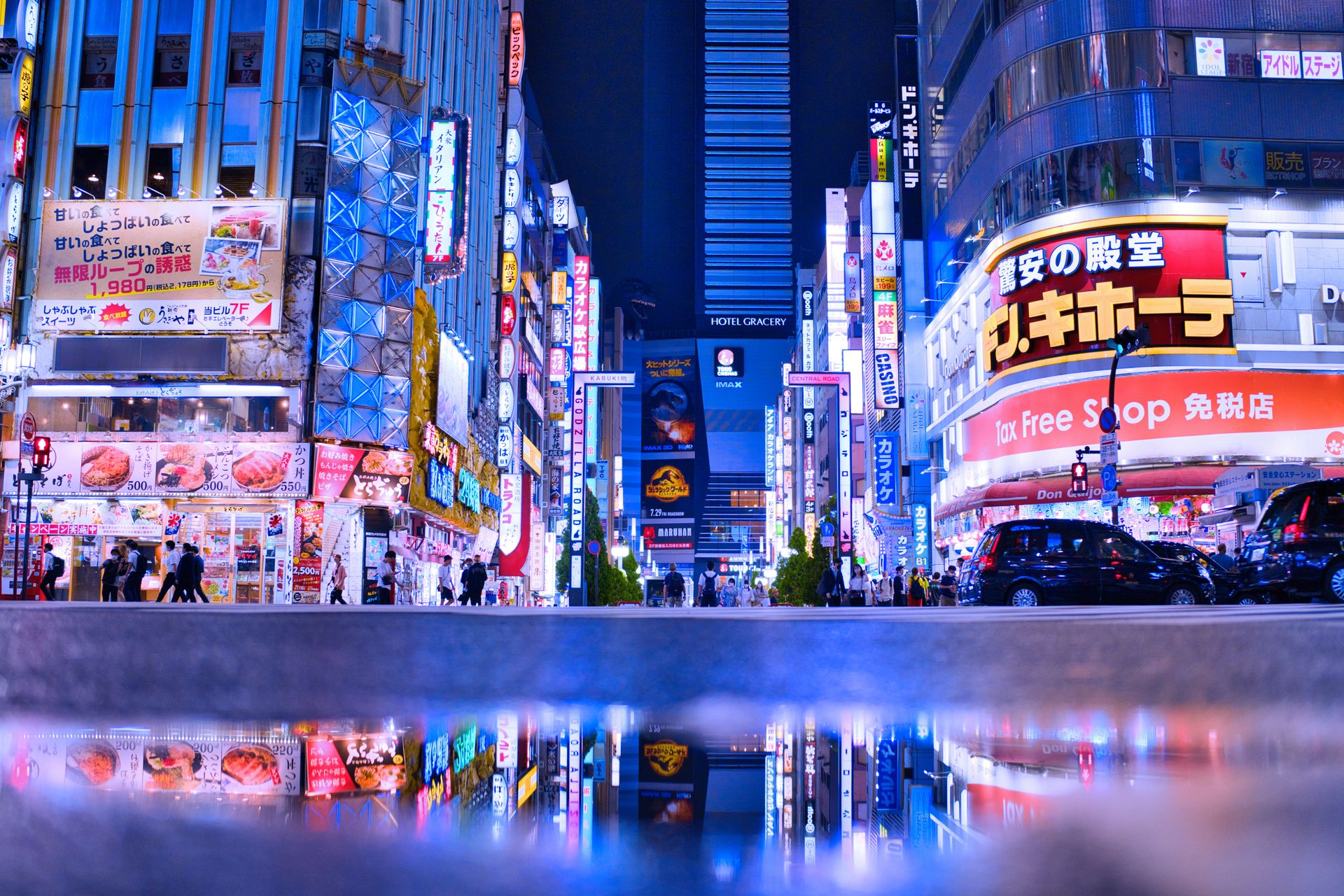
Shinjuku offers the greatest concentration of visibly varied nightlife in Tokyo. East of the station, Kabukicho contains bars, clubs, host and hostess venues, restaurants, hotels and adult-oriented businesses in a dense grid. Golden Gai and the Korean restaurants of Shin-Okubo are nearby but have distinct identities.
Transport is excellent: JR, private railways, Tokyo Metro and Toei lines converge around Shinjuku, while Seibu-Shinjuku serves Kabukicho’s northern edge. This convenience also creates difficult station navigation and large late-night crowds. Many trains stop around midnight, with exact last departures varying by line, direction, day and station.
The district has abundant accommodation across multiple price levels, but proximity does not establish that a hotel accepts commercial visitors. Kabukicho is also the clearest place to apply Tokyo police advice never to follow street touts. Police warn that foreign visitors have been led to associated venues, overcharged or had cards used without their knowledge. Research a venue before arriving and approach it directly.
Ikebukuro
Ikebukuro is a major northern and western Tokyo interchange, useful for travellers on the JR Yamanote and Saikyo lines or the Seibu, Tobu and Metro networks. The east side combines large retail and entertainment complexes with busy side streets; the west side has hotels, restaurants and a more dispersed night scene.
Its practical advantage is reach. Visitors staying in Saitama-facing districts or northwestern Tokyo may avoid crossing the city, and many outcall operators list Ikebukuro as a standard or central dispatch area. Nevertheless, two hotels a few streets apart can have different visitor rules, and small venues may function entirely in Japanese. Ikebukuro suits someone who values transport and a broad commercial district more than an internationally oriented nightlife environment.
Ueno and Okachimachi
Ueno is simultaneously a museum-and-park destination, an intercity gateway and an earthy drinking district. JR and Metro connections, Keisei access toward Narita, and the short distance to Tokyo Station make it convenient for travellers. South toward Okachimachi, Ameyoko and the railway arches provide casual restaurants, standing bars and late-evening activity.
Hotels range from compact business properties to larger tourist accommodation. The after-dark environment is more local and fragmented than Kabukicho: nightlife exists among shopping streets rather than defining the entire district. Ueno can suit visitors staying in eastern or northern Tokyo, but English ability and foreigner policies should be checked individually.
Uguisudani
Uguisudani is one stop from Ueno on the Yamanote Line and is known for a concentration of short-stay hotels near the station. Its railway convenience and room supply make it relevant to some appointment systems, but the neighbourhood is small. A hotel cluster is not the same as a comprehensive nightlife district: dining, clubs and English-speaking reception options are much narrower than in Shinjuku or Ueno.
Check the selected hotel’s admission, occupancy and payment system. Some properties are designed for couples arriving together rather than a guest receiving a later visitor.
Gotanda
Gotanda is a working business district with office crowds, izakaya, adult-oriented listings and a useful hotel inventory. The JR Yamanote Line, Toei Asakusa Line and Tokyu Ikegami Line provide access, and Shinagawa is close enough for travellers arriving by Shinkansen or staying in southern Tokyo.
Its strengths are practicality and shorter travel from Shinagawa, Meguro or western Haneda-facing districts. Its weaknesses are a less scenic street environment and fewer internationally oriented nightlife choices. The district becomes quieter unevenly: busy around the station while side streets can empty quickly. Visitors who need English support should arrange it before travelling rather than expecting bilingual walk-in reception.
Roppongi
Roppongi’s identity is international nightlife: clubs, late bars, restaurants, embassies and luxury developments. English is more common in mainstream hospitality than in many Tokyo districts. Spending expectations can also be higher, particularly for clubs, premium bars and nearby hotels.
This is not a traditional concentration of Japanese adult-service categories comparable with older regulated areas. It is primarily a cosmopolitan party district where adult-oriented offers may appear alongside ordinary nightlife. Tourist familiarity creates its own risk: do not follow promoters to unknown bars or accept an unexplained charge system. Roppongi is convenient on the Hibiya and Oedo lines but lacks a JR station, making a route check important before the last trains.
Shibuya
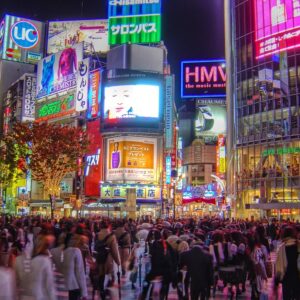
Shibuya is shaped by music, fashion, restaurants, live venues and clubs. Maruyamacho, uphill from the station, contains clubs and short-stay hotels, while the redevelopment around the station has added mainstream hotels and commercial buildings. The station connects JR, Metro, Tokyu and Keio routes, but its exits and construction-era pathways can be confusing.
High nightlife visibility does not mean easy access to adult services. Some profile-based businesses cover Shibuya, yet venue options and foreign-customer policies remain separate. Crowds, slopes and the distance between a selected hotel and the station can complicate a rushed meeting. Shibuya best suits visitors prioritising clubs and contemporary nightlife who have already confirmed any separate booking.
Ginza
Ginza’s adult nightlife reputation centres on high-end hostess clubs and lounges rather than conspicuous outcall or walk-in adult venues. Business entertainment, established customer relationships, polished presentation and substantial budgets are important. Some clubs depend on introductions; others accept reservations but may have limited English.
Ask for the entire charging structure, including set length, bottles, hostess drinks, nomination, tax and service. Smart dress and restrained conduct matter more here than in a casual bar. Ginza is served by several Metro stations and is walkable from Yurakucho, but late-night taxi costs should be considered. It is appropriate for formal hosted drinking, not for visitors expecting an English-speaking sexual-service district.
Other Relevant Areas
Akihabara is primarily an electronics, gaming, anime and themed-café district. Maid cafés and similar venues sell performance, conversation and themed hospitality, not implied sexual access. Shinbashi is an office-worker drinking centre with izakaya and standing bars; Japanese helps in its compact local venues. Kinshicho is an eastern transport and entertainment hub with hotels and local nightlife but less tourist-oriented guidance.
Otsuka is a smaller Yamanote Line district with local bars and hotels, useful mainly when accommodation or a confirmed dispatch zone makes it convenient. Shin-Okubo is best known for Korean food and pop culture, although its proximity to Kabukicho creates some nightlife overlap. Akasaka combines corporate offices, luxury hotels, restaurants, jazz bars and established entertainment culture; it generally feels more business-led and discreet than Roppongi.
No district label guarantees foreign admission. Even neighbouring businesses can apply different language, nationality, identification and reservation policies.
How to Choose a Suitable Area
Start with accommodation and transport rather than a ranking of nightlife districts. A confirmed venue ten minutes from your hotel is more practical than a famous area requiring two transfers and a late taxi. Check the final train for the exact line and direction on the operator’s current timetable; “around midnight” is a planning warning, not a departure time.
Match the area to the category. Shinjuku offers broad visible nightlife, Roppongi and Shibuya suit mainstream clubs and bars, Ginza is associated with upscale hosted drinking, and Ueno or Ikebukuro may be better bases for northern Tokyo. Outcall customers should prioritise an approved hotel inside the stated service zone.
Budget for the whole evening: course or set, additional fees, hotel, drinks and a taxi if trains finish. Limited Japanese favours businesses that publish real booking support, not merely a translated landing page. Avoid creating a schedule with no margin for finding an address, reception checks or dispatch delays.
Booking Methods and Information Requested
Telephone remains common because reception can check schedules, location and customer eligibility in real time. It is also the hardest channel for non-Japanese speakers. Other operators accept an official website form, email, LINE or another messaging application. Venue-based businesses may use in-person reception, while an upscale club may accept a hotel concierge or known introducer contacting it. Concierge coordination is appropriate only when both the hotel and business offer it.
Online profile directories can help identify options, but the official booking channel should confirm the appointment. Compare telephone numbers, account names and domains. Do not transfer money to a different account merely because someone messages after a public enquiry.
A booking request may ask for the date, preferred start time, course duration, selected person, hotel name, room number, customer name, reachable Japanese number, nationality, spoken language and age confirmation. Some businesses ask whether it is a first visit or whether the customer has tattoos. Requirements vary.
Provide truthful, consistent information. A mismatched hotel, changing name, unreachable phone, vague age response or refusal to state a usable language can appear fraudulent or make safe dispatch impossible. If the business declines, do not attempt a second identity or ask another person to conceal the same details.
Profiles, Schedules and Availability
A profile is advertising, not an identity record. Photos may be professionally edited, cropped, partially obscured or older than expected. Some sites identify image updates or offer photo-verification conventions, but no badge eliminates the need for realistic expectations. Advertised age and physical descriptions should also be understood as profile claims unless the operator explains its verification method.
Personality descriptions—“friendly,” “elegant,” “English OK”—are short promotional summaries. “English OK” might mean a few routine phrases rather than the ability to negotiate detailed arrangements. Working area identifies a base or dispatch zone, not necessarily every address within it.
Shift times show planned working hours. “Available now” can lag behind reception’s actual calendar, while “fully booked” may change after a cancellation. New face means recently listed with that business, not necessarily new to the industry. Rankings may reflect bookings, page views, staff selection, campaign rules or undisclosed criteria.
A visible schedule does not guarantee acceptance of the customer, hotel or requested course. Same-day illness, transport disruption and changed personal availability can alter a shift. Ask reception to confirm the person, duration, start time, area and total before treating the booking as final.
Language Barriers
Language restrictions are operational, not merely unfriendly. Staff must communicate timing, charges, location, health rules, prohibited conduct, consent and what to do if something changes. Where reception believes this cannot be done reliably, it may refuse the booking.
Translation applications can help with a written enquiry or a simple rule, but they are weak at euphemism, rapid speech and ambiguous service terminology. “Foreigner-friendly” browsing may mean translated profiles rather than bilingual telephone reception or in-person interpretation.
Use short, factual messages. For example: “Hello. I am 32, visiting from Canada, and I speak English only. Is a 90-minute booking available on 14 September at 8:00 p.m. at [hotel name]? Please confirm whether the hotel is accepted and the complete price.”
A simple Japanese version is: “こんにちは。9月14日20時から90分コースを予約できますか。ホテルは〇〇です。英語のみですが、利用可能でしょうか。合計料金も教えてください。” It asks whether a 90-minute booking is available at 8:00 p.m. on 14 September, names the hotel, truthfully states that the customer speaks only English and requests the total price. It does not attempt to bypass a restriction.
Operating Hours and Timing
Some businesses begin in the afternoon; others concentrate on evening and late-night demand. Published hours describe the operation, while an individual profile’s hours describe one planned shift. “Open until 2:00 a.m.” may coexist with a last reception before midnight because travel and course time must finish within operating limits.
Friday, Saturday and holiday-eve slots are more competitive. Popular profiles may require advance reservations, although same-day cancellations create occasional openings. A same-day enquiry is reasonable, but repeated messages every few minutes are not.
For outcall bookings, allow time for reception confirmation, the worker’s preparation and transportation. Last-train planning matters for the customer even when the business operates later. Check live railway information because maintenance, disruption and timetable revisions can change the plan.
Hotels and Accommodation
Business hotels often control access closely and may require every occupant to register. City and luxury hotels may permit ordinary visitors only in public areas or until a stated time, while commercial activity can be prohibited separately. Love hotels are designed for couples and may offer short stays, but their reception systems, re-entry rules and acceptance by a particular operator vary.
Serviced apartments can have front desks, resident-only lifts or no-visitor clauses. Private accommodation may be governed by host rules, leases, building management and booking-platform conditions. A private entrance is not permission.
Ask the hotel directly about visitors, room occupancy and commercial service restrictions without requesting evasion advice. Ask the adult business separately whether it serves that named property. Both answers matter. If an extra-person charge applies, pay it properly. If the hotel declines, choose another lawful arrangement before dispatch begins.
Understanding Prices
The base course usually covers a stated duration, but it may be only the first line of the bill. Additional components can include ordinary nomination, special nomination, transport, a distant-area supplement, membership or registration, hotel cost, late-night surcharge, extension, cancellation and clearly disclosed optional charges.
Hosted drinking has a different structure: a set or cover, customer drinks, staff drinks, bottle charges, nomination, extensions, tax and service. An introductory price may apply only to first-time customers, certain hours or a basic plan. Always ask whether displayed prices include consumption tax and service charges.
Consider this purely hypothetical calculation, not a current Tokyo quotation: a ¥24,000 course plus a ¥3,000 nomination fee, ¥4,000 transport charge and ¥9,000 hotel room would total ¥40,000. If a late-night surcharge of ¥2,000 applied, the total would become ¥42,000. The example demonstrates arithmetic only; real charges must come from the current official price page or reception.
Ask for a written itemisation when possible: “course, nomination, transportation, hotel, tax and every other required fee.” If staff will state only the cheapest headline figure, do not assume the difference will be small.
Payment Expectations
Cash remains common. Some businesses accept major credit cards, QR payments or other electronic methods, but acceptance can depend on the card issuer, device, location or course. A card-processing or administrative surcharge may appear; it should be disclosed before confirmation.
Venue businesses may collect payment at reception. Outcall operators may request payment to reception electronically, to the worker after arrival or as a deposit for certain bookings. Advance payment is not automatically fraudulent, but it requires stronger verification.
Confirm the payee, amount, currency, timing and refund or cancellation conditions. Avoid payment links arriving from an unrelated domain, personal accounts that cannot be connected to the operator or requests for gift cards and cryptocurrency without clear, credible business documentation. No payment method guarantees recovery if the transaction proves misleading.
Identification and Age Requirements
Regulated adult premises exclude people under 18, and non-store adult businesses may not accept under-18 customers. Alcohol and tobacco cannot be supplied to anyone under 20. Many establishments set a customer minimum of 18 or 20 depending on their category, alcohol service and internal policy.
A business may ask to inspect a passport, residence card or other government-issued photo identification. This is an establishment procedure unless a specific law requires the check in that situation. Do not confuse it with the separate immigration requirement: short-term foreign visitors are generally required to carry their passport, while qualifying residents carry their residence card.
Foreign customers may encounter stricter document checks because staff must verify age, name and contact reliability without familiar domestic credentials. Carry the original document required by law, but do not casually transmit a full passport image. If remote verification is demanded, ask why, which fields are necessary, how the image is secured and when it is deleted. A business can still refuse entry because of intoxication, conduct or its own eligibility rules.
Etiquette and Expected Behaviour
- Be punctual. Notify reception as soon as a delay becomes likely. Late arrival may shorten the appointment or trigger cancellation.
- Arrive clean and sober. Personal hygiene is a common house rule. Serious intoxication makes communication and consent unreliable and frequently leads to refusal.
- Follow reception instructions. Use the agreed entrance, meeting point and payment process. Do not introduce an unregistered additional person.
- Respect consent and boundaries. Payment buys only the stated commercial service. It never removes another person’s right to refuse, pause or end an interaction.
- Do not negotiate prohibited requests. Repetition, extra cash or claiming that another establishment allowed something does not change the rules.
- Keep phones away unless invited. Photography, audio recording, video and screenshots of private communications may be forbidden. Never record secretly.
- Request extensions through the stated system. Do not assume that an appointment can continue because the next hour appears free.
- Communicate calmly. If a translation fails or a fee is disputed, stop and contact reception rather than arguing with the individual worker.
- Cancel promptly. Read the cancellation deadline and pay a valid disclosed fee where applicable. Disappearing damages future booking eligibility.
- Protect privacy in both directions. Do not publish names, room details, messages or identifiable images without permission.
Why a Booking May Be Rejected
Common reasons include insufficient shared language, inability to verify age, an unapproved hotel, an address outside the dispatch zone, intoxication, abusive messages, inaccurate customer information, refusal to follow rules, an unavailable schedule or a record of late cancellation.
Some businesses apply nationality, residency or Japanese-language policies. Others evaluate requests individually. A website may be browseable in English while reception accepts only Japanese-speaking customers. The selected person may also decline an appointment under personal or operational rules.
Completing a checklist improves clarity; it does not create entitlement to service. Do not pressure staff for a detailed personal explanation, use a Japanese-speaking intermediary to conceal your language ability or make a new booking with false information.
Common Scams and Warning Signs
Street touting is the clearest warning. Tokyo police advise visitors not to follow touts under any circumstances, citing excessive charges and unauthorised card use at associated venues. A fluent approach in English is not evidence of legitimacy.
Other warning signs include prices that remain unclear after direct questions, immediate payment pressure, copied or inconsistent profile photographs, different telephone numbers across supposedly official pages, no business rules, unexplained changes of the selected person, disposable messaging accounts and payment links unrelated to the published domain.
Be sceptical of impossible promises, “guaranteed acceptance” for every nationality, claims that hotel rules never matter or sites presenting every profile as constantly available. Surprise charges become more likely when tax, service, transport, hotel and cancellation terms are absent.
Verification is cumulative. Start from the official website rather than an advertisement. Check that its contact channels agree, price and rules pages are coherent, schedules have recent dates, service areas are defined, cancellation terms exist and payment instructions identify a consistent recipient. Search for recent independent reporting, but remember that reviews can be purchased, obsolete or written about a different branch.
If staff substitute another person, change the location or add a material fee, ask them to reconfirm the booking. Decline before paying or before service begins if the revised terms are unacceptable. Do not let urgency turn an unverified proposal into a transaction.
Privacy and Discretion
Reception may request a name, age, telephone number, hotel and room number because these are needed to arrange the appointment. That practical need does not justify collecting unlimited information. Read the privacy policy and avoid volunteering passport numbers, employer details, travel itineraries or social-media accounts.
Official calls and messages still create records. Hotel staff may observe or register visitors, and card statements may display the operator, a payment processor or another disclosed billing name. Ask how a card charge will appear if discretion matters, but do not assume the answer guarantees invisibility.
Profile sites and directories may use cookies, analytics and advertising trackers. Use ordinary browser privacy controls, avoid shared devices and log out of messaging services. Contact the operator through its official channel rather than posting personal booking information in public comments.
Passport images deserve particular care. Do not send one merely because an unknown account requests it. Where age verification is justified, establish the operator’s identity, ask whether an in-person check is possible, obscure unnecessary fields only if the business accepts that method, and confirm its retention policy. Complete anonymity cannot be promised by a venue, directory, hotel or payment service.
Practical Safety Guidance
- Research the category, operator and location before leaving your hotel.
- Use contact information published on the official website and keep a copy of the confirmation.
- Confirm the complete cost, payment timing and cancellation rule in writing where possible.
- Stay sufficiently sober to understand charges, consent and directions.
- Keep your passport, wallet, telephone and room key under your control.
- Do not surrender a payment card or allow it to be taken out of sight.
- Avoid street touts and unverified payment accounts.
- Leave if the location, person or price materially differs from the agreement or the situation becomes threatening.
- Use licensed taxis, recognised ride-hailing functions or established public transport after late appointments.
- Do not possess drugs or participate in prohibited activity.
For an immediate crime or emergency, call Tokyo police on 110. A nearby koban, or police box, can help with theft, lost property and directions. For non-emergency police consultation in Tokyo, call #9110; multilingual assistance is available. The Japan National Tourism Organization’s Japan Visitor Hotline, 050-3816-2787 within Japan or +81-50-3816-2787 from overseas, provides round-the-clock English, Chinese and Korean assistance for visitor information and emergencies.
Step-by-Step Planning Checklist
- Choose the category. Decide whether you want hosted drinking, a venue-based adult business, an outcall arrangement or ordinary non-sexual massage.
- Choose an area. Match the district to your hotel, transport, preferred atmosphere and the actual service zone.
- Confirm foreign-customer acceptance. Ask directly; do not infer it from English profiles or foreign reviews.
- Check language support. State your real ability and learn whether written translation is acceptable.
- Read the system and rules. Review age, conduct, hotel, tattoo, cancellation and prohibited-request policies.
- Review profiles and schedules. Treat photographs and availability as promotional information requiring reception confirmation.
- Confirm the complete price. Include nomination, transport, hotel, tax, service, late-night and mandatory fees.
- Check hotel suitability. Obtain separate answers from the accommodation and the operator before dispatch.
- Prepare identification. Carry the original document required by law and determine what the business expects to inspect.
- Send a clear enquiry. Give the date, time, duration, profile, location, age and language truthfully.
- Confirm time and location. Record the meeting point, room procedure, dispatch estimate and contact number.
- Follow stated rules. Arrive clean, punctual and sober, and respect every boundary.
- Keep official contact information. Save reception details in case of delay, substitution or misunderstanding.
- Reconfirm unclear details. If any material term changes, obtain a new total and explicit confirmation before proceeding.
Frequently Asked Questions
Are Tokyo adult entertainment businesses legal?
Japan regulates multiple entertainment and sex-related business categories, but that does not make every advertised or requested act lawful. Operators must comply with the rules applying to their category, location, notification or permission status, advertising and customers. The Prostitution Prevention Act separately prohibits compensated intercourse with an unspecified person. Avoid any operator asking you to ignore the law.
Do all establishments accept foreign visitors?
No. Policies may depend on nationality, residence, Japanese ability, identification, hotel, communication method and the selected person. Acceptance by one branch or on one previous visit does not bind another business or guarantee a future booking.
Can I book without speaking Japanese?
Sometimes. Look for an actual English booking channel and state that you speak English only. A translated website may not indicate bilingual reception. Translation software can support simple written exchanges but may be inadequate for rules, consent or an urgent problem.
Can a service visit any Tokyo hotel?
No. The operator may limit its dispatch area or exclude particular properties, while the hotel may prohibit room visitors or commercial services. Visitor access alone does not settle the commercial-use question. Confirm with both parties.
Is the displayed price the final price?
Not necessarily. Nomination, transport, area, membership, hotel, tax, service, late-night and other disclosed charges may apply. Ask for the complete amount for your selected duration, person, time and location.
What is deriheru?
Deriheru is the abbreviation of delivery health, generally a non-store adult-service arrangement dispatched to an approved hotel or location. The operator’s service zone, hotel rules, transport fee and permitted scope must be confirmed.
What is the difference between soapland and delivery health?
A soapland is a physical establishment visited by the customer. Delivery health is organised as a non-store dispatch service, usually requiring an accepted hotel. Their regulatory classification, geography, reception procedure and cost structure differ.
Can I make a same-day booking?
Many businesses accept same-day enquiries, but evenings and weekends fill quickly. An “available now” marker may not be current, and travel time can prevent late dispatch. Advance booking is preferable when a specific profile or time matters.
Is a passport required?
A business may require government photo ID and may specifically ask foreign visitors for a passport. That is an establishment policy unless a particular legal requirement applies. Separately, short-term foreign visitors are generally required to carry their passport in Japan; qualifying residents carry a residence card.
Are credit cards accepted?
Some establishments accept cards, while others are cash-only. A surcharge or different payment process may apply. Confirm the card brand, total, billing name and whether payment occurs at reception, online or after arrival.
Are profile photos always recent?
No guarantee should be assumed. Photos may be retouched, professionally styled or older. Look for dated updates and transparent profile policies, but keep expectations realistic even when a site claims photo verification.
What happens if I arrive late?
The appointment may be shortened, moved or cancelled, potentially with a fee. Contact reception before the scheduled time. Do not assume the next booking can be delayed to preserve your full course.
Can the establishment cancel a confirmed booking?
Yes. Illness, transport disruption, schedule changes, hotel refusal, failed age verification or concern about customer conduct can make the appointment impossible. Ask what happens to any deposit when cancellation originates with the operator.
Is photography allowed?
Assume it is prohibited unless explicit permission is given. Secret photography, audio or video violates privacy and may breach establishment rules or law. Permission for one image does not authorise recording the entire appointment or publishing it.
Which district is easiest for a first-time visitor?
There is no universal answer. Shinjuku has the widest visible range and strongest transport, but also crowds and touting risk. Roppongi offers more English in mainstream nightlife but is expensive and not a traditional adult-service centre. Ueno and Ikebukuro can be practical for northern accommodation. The easiest area is usually the one near your hotel where a suitable business has explicitly confirmed language, eligibility, location and price.
Conclusion
Making sense of adult entertainment in Tokyo begins with categories, not assumptions. Soapland, delivery health, hotel health, hostess clubs, girls bars and private profile services have different locations, booking procedures and commercial purposes. Familiar English labels often conceal those differences.
A responsible plan connects the category to a suitable district, confirms the establishment’s current customer and language policy, checks the hotel separately, and calculates the full cost rather than the headline course. It also leaves room for schedule changes, transport and refusal.
Most importantly, commercial payment never overrides law, consent, privacy or house rules. Current information, direct communication and a willingness to walk away from unclear terms are more useful than any promise of universal access. Tokyo nightlife is easier to understand when legal requirements, industry customs, promotional language and individual business policies are kept clearly separate.